If your boiler keeps losing pressure, it can be worrying, especially during cold weather when you rely on your heating the most. The good news is that you can carry out some simple, safe checks yourself to get a better idea of what might be causing the problem. These quick steps can help you spot obvious issues and decide if it’s time to call a Gas Safe engineer for a professional fix. Taking action early can keep your home warm and prevent more costly repairs later.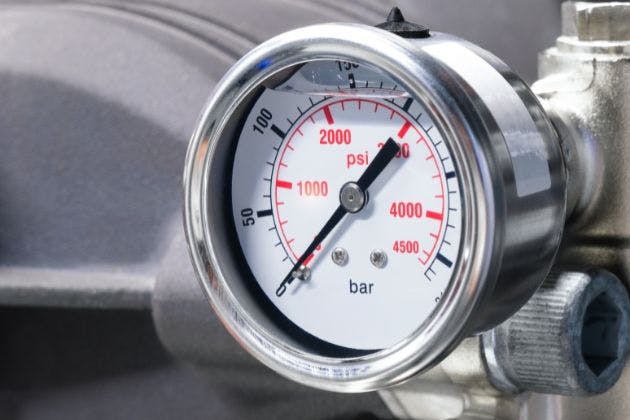
Understanding boiler pressure
On most modern combi and system boilers, the pressure gauge shows the pressure of water in the central heating system. This is separate from your water supply pressure at the taps.
Every boiler model has its own recommended pressure range, so it is essential to check your user manual or the manufacturer’s guidance. As a general rule, many boilers sit around 1.0 to 1.5 bar when cold, and rise slightly when the heating is on.
If the pressure drops too low, the boiler may lock out to protect itself. This means no heating or hot water until the pressure is corrected and any underlying issue is resolved.
What happens when the boiler pressure drops
Low boiler pressure usually makes the system less efficient and can eventually stop the boiler from working. You might notice radiators not getting fully warm or hot water cutting out.
Repeated pressure loss is a sign that something is wrong, even if you can temporarily re-pressurise the system. Ignoring it can lead to bigger problems, such as leaks getting worse or internal components being damaged.
Common reasons your boiler keeps losing pressure
Several everyday issues can cause a gradual or sudden drop in boiler pressure. Some are simple, while others need a Gas Safe engineer to put right.
Small leaks at radiators, valves, towel rails or pipe joints
Pressure relief valve (PRV) discharges if the system has been over-pressurised
Expansion vessel problems, so pressure swings up and down too much
Bleeding radiators without topping up correctly afterwards
Recent draining or refilling of the system for maintenance
Internal boiler faults, such as heat exchanger or seal issues
Some causes, like a slightly open radiator bleed valve, can be simple to sort. Others, especially those inside the boiler casing, must be handled by a qualified professional.
Safe checks homeowners can do
Before touching anything, make sure you feel comfortable and always follow your boiler’s manual. If in doubt, do not proceed and call a Gas Safe engineer.
1. Check the boiler pressure gauge
Look at the pressure gauge on the front of your boiler or on nearby pipework. Many gauges have a green section for the normal range and a red section for too high or too low.
Check the pressure when the boiler is cold and again when the heating has been on for at least 20 minutes. A slight rise when hot is normal, but large swings can indicate an issue with the expansion vessel or PRV.
2. Look for obvious leaks around your home
Walk around your radiators, valves and any visible pipework. You are looking for damp patches, staining, green or white crust on joints, or small drips.
Check beneath radiators, around lockshield valves and thermostatic radiator valves, and near towel rails in bathrooms. Even a slow, occasional drip can cause pressure loss over time.
3. Inspect the pressure relief valve outlet outside
The pressure relief valve allows water to escape if the system pressure gets too high. It usually discharges through a short copper pipe that exits the property outside, often near the boiler location.
Look at the end of this pipe for signs of recent discharge, such as wet patches on the wall or ground, or white limescale marks on the pipe. If you suspect the PRV is letting water by, do not attempt to adjust or replace it yourself.
4. Safe use of the filling loop
Most sealed systems have a filling loop that allows you to top up the pressure from the mains. Some are flexible silver hoses with small valves; others are built into the boiler.
Only use the filling loop if your user manual states it is safe for you to do so and you understand the steps. Typically, you will slowly open the valves until the gauge reaches the correct cold pressure, then firmly close them again.
If you have to top up more than a few times a year, there is a fault that needs attention. Do not keep topping up repeatedly, as this can introduce fresh oxygen into the system and strain components.
What you should not do with a low-pressure boiler
There are some clear red lines where it is safer to stop and call an engineer:
Do not remove or open the boiler case; this can expose gas and combustion parts
Do not bypass or cap off the pressure relief valve or any safety device
Do not keep topping up the system daily or weekly without finding the cause
Do not attempt internal repairs unless you are Gas Safe registered
If you smell gas, see scorch marks, or the boiler is making unusual noises, turn it off at the boiler controls and the mains power, then contact a Gas Safe engineer urgently.
Typical pressure problems and what they suggest
Pressure drops overnight
If you re-pressurise the system and it has dropped again by the morning, there is usually a leak somewhere or an internal component letting by. The leak may be hidden under floors or in walls.
In this situation, stop topping up and arrange a diagnostic visit. Repeated fresh water top-ups can increase corrosion and sludge inside the system.
The pressure rises too high when the heating is on
If the pressure climbs sharply when the heating is running, then falls back when it cools, the expansion vessel may not be doing its job properly. A faulty expansion vessel often leads to the PRV discharging water.
This is not something a homeowner should attempt to fix. A Gas Safe engineer can check the vessel’s charge and condition and replace it if required.
Pressure drops after bleeding radiators
Bleeding radiators releases trapped air, which is helpful, but it also reduces system pressure. If you bleed more than one radiator, it is normal to see the pressure gauge drop afterwards.
Check your manual for guidance on re-pressurising via the filling loop. If the pressure keeps dropping even when you have not bled radiators, it points to another underlying issue.
Frequently asked questions about boilers losing pressure
Is it safe to use my boiler with low pressure?
Most modern boilers will shut down automatically if the pressure is too low, which prevents damage. If it is still running near the bottom of the recommended range, it is usually safe but may be inefficient.
If the gauge is in the red low zone or near zero, turn the boiler off and address the pressure problem before using it again.
Can I ignore small pressure drops?
A slight drop over many months can be normal and may only need a quick top-up. However, regular or sudden drops should never be ignored.
Persistent loss of pressure almost always means there is a leak or a component fault that will worsen if left alone.
Do I have to replace my boiler if it keeps losing pressure?
Not necessarily. Many pressure issues are caused by fixable faults such as a leaking valve, faulty PRV or failed expansion vessel.
A thorough diagnostic by a Gas Safe engineer in Sheffield, Barnsley or Rotherham can identify whether a repair is cost-effective or if it is time to consider a replacement.
What we do on a diagnostic visit
When D.E.S. Gas Safe Solutions attends a boiler losing pressure, the first step is a visual inspection. We check the boiler, radiators, visible pipework and the area around the PRV outlet for signs of leaks or discharge.
We then carry out pressure tests and, where appropriate, isolate different parts of the system to narrow down the fault. The expansion vessel and PRV are tested, and we check the integrity of seals and internal components inside the boiler.
Safety checks are performed as standard, including flue condition, ventilation and gas tightness where needed. We explain our findings clearly and talk you through repair options and any longer-term recommendations.
When to call a Gas Safe engineer
You should arrange a professional visit if you are topping up frequently, see visible leaks you cannot stop, or notice the PRV pipe outside dripping. Sudden pressure loss combined with boiler error codes is another clear sign.
It is also important to call an engineer if you feel unsure about using the filling loop, cannot find the cause of pressure loss, or live in an older property with concealed pipework that might be leaking.
Need help with a boiler losing pressure?
If you are in Barnsley, Rotherham or Sheffield and your boiler keeps losing pressure, D.E.S. Gas Safe Solutions can help. Our Gas Safe engineers provide clear, safety-focused diagnostics and honest advice.
To book a visit or discuss your boiler issue, call 01143211817 or visit our domestic gas services and central heating systems pages to see how we can support you.